

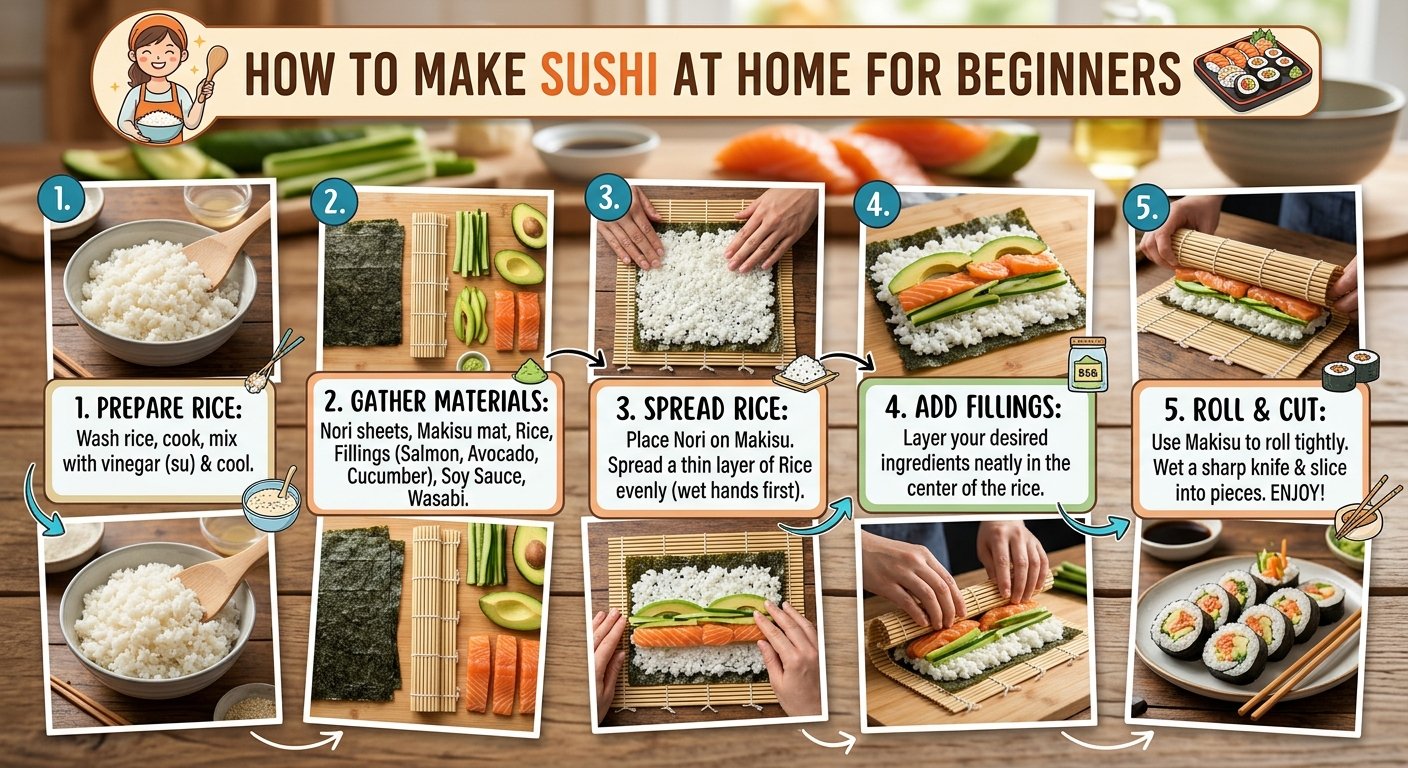
How to Make Sushi at Home for Beginners can be easier than you think. You do not need special cooking skills or an expensive kitchen setup. With a few basic ingredients, you can prepare fresh and tasty sushi in your own kitchen. Many people enjoy sushi at restaurants, but homemade sushi gives you more control over the ingredients and fillings. You can use vegetables, cooked shrimp, imitation crab, or other favourite ingredients.
This guide explains how to make sushi at home step by step. You will learn how to prepare sushi rice, choose fillings, roll sushi, and serve it. These simple instructions will help beginners make their first sushi rolls with confidence.
What Is Homemade Sushi?
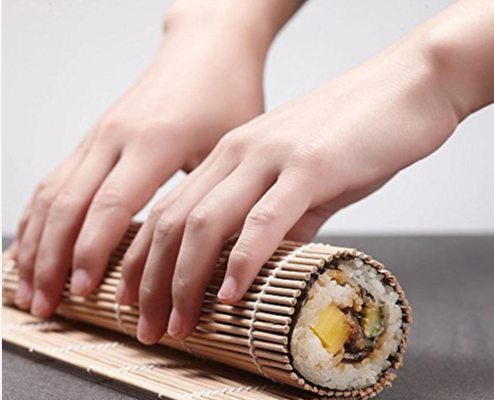
Homemade sushi is sushi that you prepare in your own kitchen. It usually includes seasoned rice, different fillings, and sometimes a sheet of dried seaweed called nori.
You can make several types of sushi at home. Some rolls contain vegetables, while others include cooked seafood or properly handled raw fish.
For beginners, vegetable rolls and cooked seafood rolls are good starting choices. They are easy to prepare and do not require special raw-fish handling.
Ingredients You Need to Make Sushi at Home
Before you start, collect all your ingredients. Preparing everything first makes the rolling process easier.
Sushi Rice
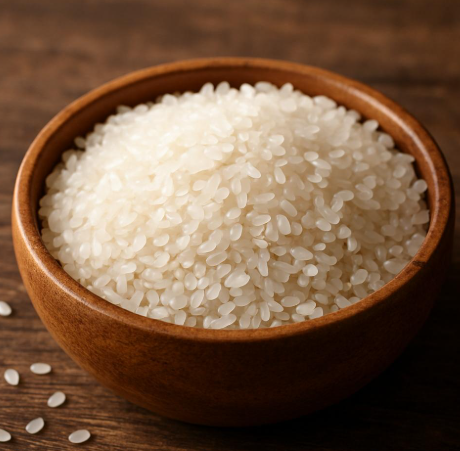
Sushi rice is the main ingredient in most sushi rolls. It has a sticky texture that helps hold the roll together.
Choose short-grain Japanese rice labelled for sushi.
Cook it according to the package instructions and season it with rice vinegar, sugar, and salt.
Nori Sheets
Nori is dried seaweed that holds many sushi rolls together. You can find nori sheets in grocery stores, Asian supermarkets, and online shops.
Use full-size sheets and cut them to the size you need.
Fresh Vegetables
Vegetables add colour, texture, and flavour to homemade sushi. Popular choices include:
- Cucumber
- Avocado
- Carrots
- Bell peppers
- Green onions
Cut vegetables into thin strips so they fit inside the rolls.
Seafood or Other Fillings
You can choose different fillings based on your taste. Beginners can try cooked shrimp, cooked crab meat, or imitation crab.
You can also make sushi without seafood by using vegetables and other plant-based ingredients.
If you plan to use raw fish, buy it from a reputable supplier who understands raw-consumption handling. The term “sushi-grade” alone does not guarantee safety.
Soy Sauce and Other Toppings
Soy sauce is a popular dipping sauce for sushi.
You can also serve sushi with pickled ginger and wasabi.
Use these toppings in small amounts so they do not overpower the flavour of your sushi.
Kitchen Tools for Making Sushi
You do not need many tools to make sushi at home. A few basic items will help you prepare neat rolls.
- Bamboo sushi mat
- Sharp kitchen knife
- Cutting board
- Rice cooker or cooking pot
- Mixing bowl
- Small bowl of water
A bamboo sushi mat makes rolling easier, especially for beginners. However, you can also use a clean kitchen towel covered with plastic wrap.
How to Make Sushi Rice at Home
Good sushi starts with properly prepared rice. Follow these steps to get the right texture and flavour.
Step 1: Measure the Rice
Measure your short-grain rice according to your recipe. Start with a small batch if this is your first time making sushi.
Step 2: Wash the Rice
Place the rice in a bowl and add cold water. Gently rub the grains with your hands.
Pour out the cloudy water and repeat until the water looks much clearer. This step removes extra surface starch.
Step 3: Cook the Rice
Add the washed rice and the correct amount of water to your rice cooker or cooking pot.
Follow the package instructions for cooking. Once the rice finishes cooking, let it rest briefly as directed.
Step 4: Season the Rice
Mix rice vinegar, sugar, and salt in a small bowl until the sugar dissolves.
Transfer the cooked rice to a wide bowl. Slowly add the vinegar mixture and gently fold it into the rice with a rice paddle or spatula.
Avoid crushing the grains. Let the rice cool until it reaches room temperature before making sushi.
How to Make Sushi at Home Step by Step
Now that your rice and fillings are ready, you can start making sushi rolls.
Step 1: Prepare Your Work Area
Place your bamboo sushi mat on a clean surface. Cover it with plastic wrap to prevent rice from sticking to it.
Keep your rice, nori, vegetables, and other fillings nearby.
Step 2: Place the Nori Sheet
Put one nori sheet on the bamboo mat with its shiny side facing down.
Leave enough space around the edges to make rolling easier.
Step 3: Add Sushi Rice
Wet your hands with a little water to stop the rice from sticking.
Take a small amount of rice and spread it evenly over the nori. Leave a narrow strip uncovered along the top edge.
Do not press the rice too hard. A light, even layer works best.
Step 4: Add Your Favourite Fillings
Place cucumber, avocado, cooked shrimp, or imitation crab in a line near the bottom edge of the rice.
Avoid adding too much filling. Extra ingredients can make the roll difficult to close.
Step 5: Roll the Sushi
Lift the edge of the bamboo mat closest to you. Gently fold it over the fillings.
Use your fingers to keep the ingredients in place. Continue rolling forward while applying gentle pressure to shape the sushi.
Press the roll lightly to help it hold its shape.
Step 6: Cut the Sushi Roll
Place the roll on a clean cutting board.
Use a sharp knife to cut it into even pieces. Wet the blade with a little water and clean it between cuts to prevent rice from sticking.
Step 7: Serve Your Sushi
Arrange the sushi pieces on a serving plate. Add soy sauce, pickled ginger, and wasabi if you like.
Serve homemade sushi soon after preparation for the best texture and quality.
Easy Sushi Fillings for Beginners
Choosing the right fillings can make homemade sushi more enjoyable. Start with simple combinations before trying more complicated recipes.
Cucumber and Avocado Roll
This combination works well for people who enjoy fresh vegetables. Cucumber adds a crisp texture, while avocado gives the roll a creamy taste.
California-Style Roll
A California-style roll commonly includes imitation crab, avocado, and cucumber. It is a popular choice for beginners who want a simple sushi roll.
Cooked Shrimp Roll
Cooked shrimp adds a mild seafood flavour. Combine it with cucumber and avocado for a tasty homemade roll.
Sweet Potato Roll
Cooked sweet potato gives sushi a soft texture and lightly sweet flavour. Pair it with avocado or cucumber for a simple vegetarian option.
Vegetable Sushi Roll
You can combine carrots, cucumber, avocado, and bell peppers to make a colourful vegetable roll.
Tips for Making Better Sushi at Home
Your first sushi roll may not look perfect, but practice will help you improve.
Use these tips to make the process easier.
Use the right rice: Short-grain Japanese rice creates the sticky texture needed for sushi.
Avoid too much filling: A small amount of filling makes rolling easier and helps the roll stay together.
Keep your hands wet: Wet hands prevent rice from sticking to your fingers.
Use a sharp knife: A sharp, slightly wet knife helps you cut clean sushi pieces.
Roll gently: Apply enough pressure to shape the roll without crushing the rice or fillings.
Prepare everything first: Cut your vegetables and cook your rice before you start rolling.
Common Sushi-Making Mistakes to Avoid
Beginners often make a few simple mistakes when preparing sushi. You can avoid many problems by following these suggestions.
Adding Too Much Rice
A thick layer of rice makes the roll heavy and difficult to close. Spread a thin, even layer across the nori.
Using Warm Rice
Very hot rice can make the nori soft and difficult to handle. Let the rice cool to room temperature before rolling.
Overfilling the Roll
Too many fillings can cause the sushi to open or break. Start with two or three ingredients.
Cutting With a Dull Knife
A dull knife can crush the roll and pull the fillings out. Use a sharp knife and clean the blade between cuts.
Rolling Too Loosely
A loose roll may fall apart when you cut it. Apply gentle and even pressure with the bamboo mat.
How to Store Homemade Sushi Safely
Sushi tastes best when you prepare and serve it fresh. If you have leftovers, handle them carefully. Place leftover sushi in a clean, airtight container and refrigerate it promptly at 40°F (4°C) or below. Do not leave perishable sushi at room temperature for more than two hours, or one hour when the temperature is above 90°F (32°C).
For sushi containing raw fish or cooked seafood, follow food safety guidance and avoid keeping leftovers longer than necessary. When in doubt, throw them out.
Do not rely on smell or appearance alone to decide whether sushi is safe to eat.
FAQs
Is It Easy to Make Sushi at Home?
Yes. Beginners can make simple sushi rolls with sushi rice, nori, and a few fillings.
What Is the Best Rice for Homemade Sushi?
Short-grain Japanese rice is the best choice for traditional sushi. It becomes sticky after cooking and helps hold the ingredients together.
Can I Make Sushi Without a Bamboo Mat?
Yes. You can use a clean kitchen towel covered with plastic wrap.
Can I Make Sushi Without Raw Fish?
Yes. You can prepare sushi with cooked shrimp, imitation crab, cucumber, avocado, carrots, and other vegetables.
Conclusion
Making sushi at home is a fun way to enjoy your favourite Japanese-inspired food. You only need sushi rice, nori, simple fillings, and a few kitchen tools to get started. Begin with easy combinations such as cucumber and avocado or cooked shrimp. Follow the steps carefully, avoid adding too much filling, and use a sharp knife to cut your rolls. Your first attempt may not look like restaurant sushi, but regular practice will help you improve. Try different fillings and discover which homemade sushi combinations you enjoy most.
